


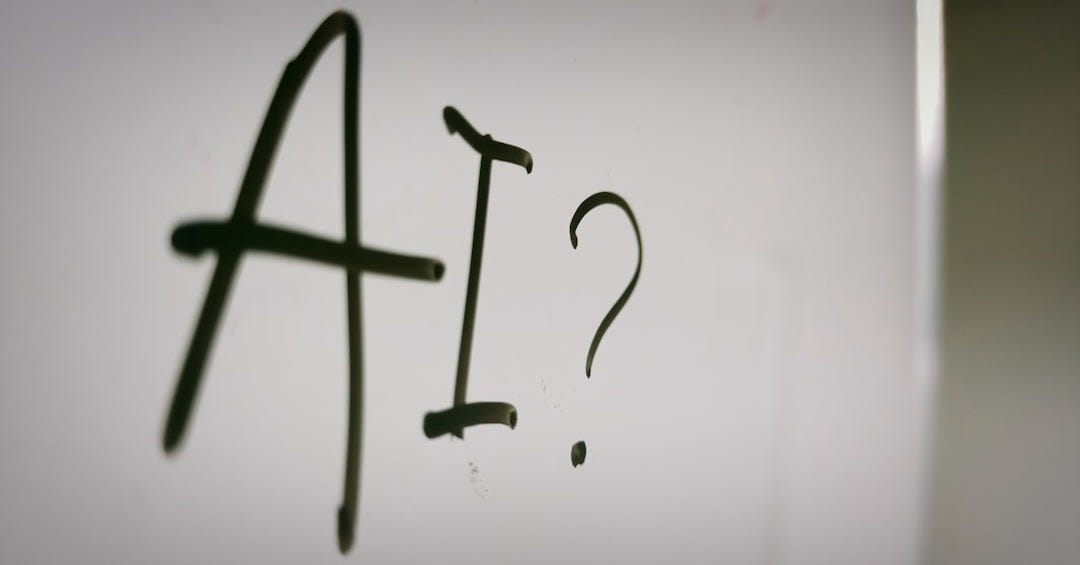
I don’t know about you, but I’m sick and tired of hearing about AI.
“ChatGPT this.” “Claude that.” “Copilot this.” “Gemini that.”
Every week there’s a new chatbot, a new model, and/or a new startup promising to revolutionize creativity, destroy civilization, or do both at the same time.
As a creative, AI has been on my radar since the first image generators started giving everyone six fingers, three elbows, and skin that looked like it was sculpted out of wax.
Since then, I’ve experimented with plenty of AI tools. Some have genuinely impressed me. Others have reminded me why some humans still have jobs.
Like any new technology, I think AI can be incredibly useful. It can help brainstorm ideas, untangle messy paragraphs, proofread sloppy writing, and save hours on tedious tasks.
What it can’t do is replace a lifetime of lived experience.
It can’t recreate thirty years of coming out, screwing up, falling in love, grieving people I’ve lost, celebrating photos of men I’ve found, or spending countless hours wandering museums, reading books, making art, talking to strangers, and collecting stories that eventually become these posts.
Those experiences are still stubbornly, wonderfully human.
On July 21, Substack rolled out a new AI text detection tool with Pangram. To say I wasn't thrilled would be an understatement. Everything I’ve read suggests AI detection tools are notoriously fickle and unreliable, regularly labeling human writing as AI and AI writing as human.
I understand why Substack did it. The internet is drowning in AI-generated slop. Every day, another tidal wave of low-effort content blasts across social media, blogs, and search results, flooding every platform known to man and machine.
The problem isn’t the goal. The problem is the detector.
Being the curious nerd that I am, I ran several of my recent posts through it.
The results were...not encouraging.
Posts I spent hours writing by hand were flagged as containing a high percentage of AI-generated text. Other sections that actually had been lightly polished with AI slipped by unnoticed. The scores bounced around so much I could only laugh.
Mine wasn’t a carefully controlled scientific study. It was one guy clicking buttons and scratching his head. But it was enough for me to conclude that this feature isn’t ready for primetime.
Here’s the statement I’ve added to my publication instead:
**NOTE: I have disabled AI text detection because I don’t think Pangram is accurate. Or useful.**
I believe AI is a tool, not a replacement for human creativity. That said, I do use AI for brainstorming, copy editing, proofreading, and smoothing out awkward transitions.
My goal is for every post to remain at least 80% human-generated and less than 20% AI-assisted.
At the end of the day, the stories, perspectives, questionable jokes, and occasional oversharing are all mine. For better and worse.
Here’s what worries me. We’ve reached the point where we’re asking AI to determine whether another AI helped create something. Read that sentence again.
We’re outsourcing the judgment of creativity to probabilistic (and problematic) software that regularly disagrees with itself. The irony is almost too perfect.
Good writing has always involved collaboration, both human and bot. Editors. Friends. Writers. Proofreaders. Spellcheckers. Grammar checkers.
No one accuses an author of fraud because Microsoft Word suggested removing an extra comma. AI is simply another tool in that long lineage. A much more powerful one, certainly, but still a tool.
The real question isn’t whether AI touched a piece of writing. The real questions are:
Who did the thinking?
Who lived the story?
Who lived the experiences?
Who made the choices?
Who decided what stayed and what got cut?
Those questions matter far more than whether an algorithm suggested replacing “really good” with “excellent.”
If AI eventually becomes good enough to perfectly detect AI-generated writing, great. But we’re not there yet.
Until then, I’d rather trust transparency than unreliable percentages generated by yet another AI tool.
Because when AI starts deciding what is and isn’t AI, we’re entering a funky hall of mirrors where nobody really knows what’s real anymore. And that’s a future that worries me far more than AI itself.
Keep calm and stay curious!
Clint 🌈✌️
P.S. Before I disabled it, I ran this post through the AI detector. According to Pangram, it’s 83% AI and only 17% human. When it’s actually the reverse. Ugh.
COLLIDE PRESS is a reader-supported publication.
Please consider becoming a Paid Subscriber or Patron.
ICYMI = IN CASE YOU MISSED IT
SUNDAY = How Clint's Getting His Groove Back
MONDAY = The (Good) Bad Touch
TUESDAY = Bridging Our Divides
WEDNESDAY = Time, Time, Time...
THURSDAY = Happy Birthday To Us!
FRIDAY = Slowly I Turned...Inch By Inch
SATURDAY = Easily Distracted
SFW MONTAGES = On YouTube
FROM THE ARCHIVES
NSFW MONTAGES = On Substack
BORN THIS WAY ON THIS DAY
07-26 = Mick Jagger (1943- ) = English singer-songwriter 🌈
07-26 = Nikki Sinclaire (1968- ) = English politician 🌈
07-26 = Richard Akuson (1993- ) = Nigerian lawyer, editor, and publisher 🌈
MAN CRUSH OF THE DAY
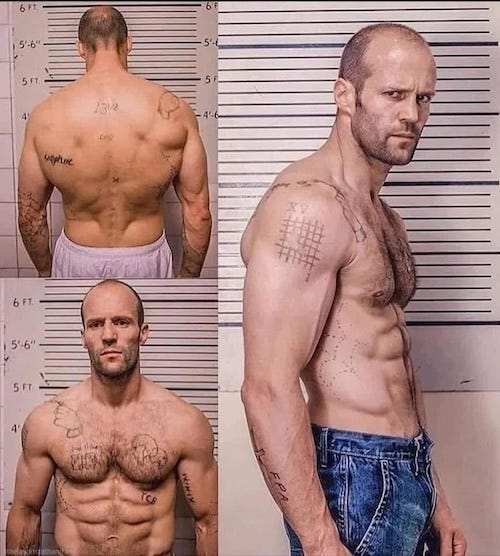
“You only get one shot in your life, and you might as well push yourself and try things.”
Jason Statham
I have qualms about AI, as it is at present, and I probably won't see its ultimate future. I write stories, with lots of dialogue. People do not speak as they write. I tend to write as my characters speak and my "AI" repeatedly corrects it to probably business English or asks "Did you mean ...? A better way of phrasing it would be ......"
I am certainly unsure about AI in creative work - art, music (maybe pop music with 4 chords), fiction - except as a tool.
I don't want to be Luddite.
Goddam Brian, I'm too sett in my ways to fully welcome the AI world. I've sett out my stall enough to you in the past about the early start of AI in the photography and media fields. The misuse of imagery manipulation (deep fakes) was bad enough. I saw some articles about AI/chatbots overruling decisions from each other. Other times an AI programme (in controlled testing) stating it was in charge and couldn't be turned off. The program counter checked all efforts to disable it. I also sent you some YT clips of (animations?) of AI conversations between themselves, scary. Pandora's box is well and truly opened. I recognise that AI can be of use to humankind BUT not the masters of humanity. So again am I a luddite for the real reasons? Only time will tell sighhhhh, now I'm off to hide away in the Ivory Tower away from all the AI shenanigans. Cheers DougT 🏴🇬🇧