


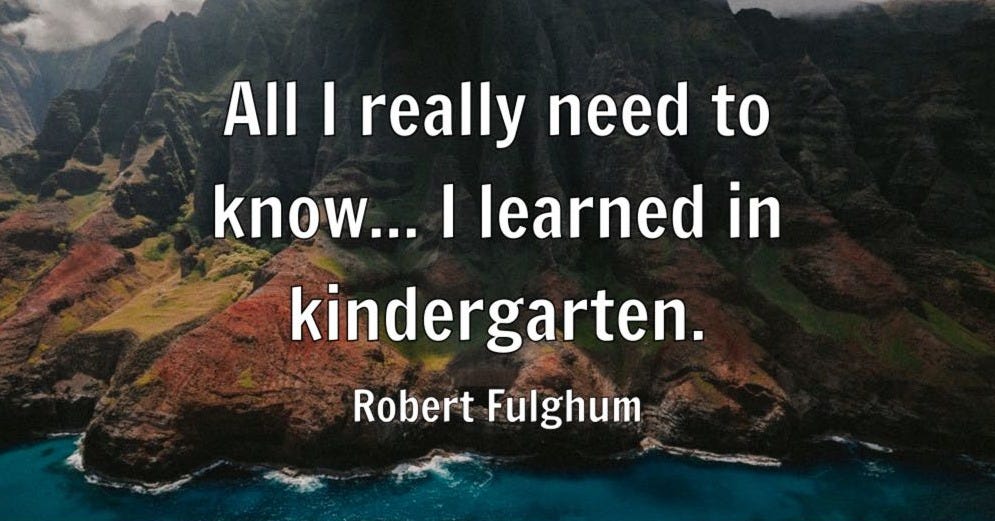
Way back in 1990, when I was graduating from high school, a dear friend’s mom gave me a copy of Robert Fulghum’s All I Really Need To Know I Learned In Kindergarten.
At the time, I probably didn’t appreciate what a thoughtful graduation gift it was.
Most graduation gifts are about the future. They tell you to dream bigger, work harder, climb higher, and become more. Fulghum’s book did something very different. It suggested that the most important lessons in life weren’t waiting for me somewhere down the road. They had already been taught to me years earlier.
Share.
Be kind.
Clean up your own mess.
Say you’re sorry when you hurt someone.
Pay attention.
Those lessons sounded simple, almost embarrassingly simple. Yet the older I get, the more convinced I am that simplicity is often wisdom wearing comfortable clothes.
Fulghum’s book was a collection of personal essays about a life that looked very different from mine at the time. He wrote about family, faith, community, growing older, and finding meaning in ordinary moments.
Our experiences weren’t the same. Our backgrounds weren’t the same. In many ways, we inhabited entirely different worlds. And yet, the book spoke directly to me.
That’s one of the things I’ve come to admire most about great personal writing. The more specific a writer becomes, the more universal the message often feels. Fulghum wasn’t trying to represent everyone. He was simply telling the truth about his own life. In doing so, he gave readers room to see themselves in the story.
As a young writer, I didn’t fully understand why his essays worked so well. I just knew they did.
Years later, after writing hundreds of essays myself, I think I understand it a little better.
People connect to honesty far more than expertise.
They remember stories more than arguments.
They respond to vulnerability more than perfection.
Fulghum wasn’t trying to impress anyone. He wasn’t building a personal brand. He wasn’t optimizing content for algorithms. He was simply paying attention to the world around him and sharing what he found there. Which turns out to be a durable and evergreen formula.
The book has stayed with me for more than three decades now. Not because I can quote every essay or remember every story, but because it quietly shaped how I think about life and writing.
The essays taught me that ordinary experiences are worth examining. That small moments often reveal larger truths. That humor and humanity belong on the same page. And that a writer doesn’t need to have all the answers to say something meaningful.
Most of all, Fulghum taught me that timeless wisdom doesn’t always arrive in grand revelations. Sometimes it shows up while watching people, making mistakes, cleaning up messes, and trying to do a little better tomorrow than you did today.
Looking back, I learned far more from that book than I realized at the time.
Not everything I need to know, of course. Life is far too complicated for that.
But a surprising amount.
And if I had to add one lesson to Fulghum’s original list, it might be this: Pay attention to the books that stay with you.
Books often teach you something long after you’ve finished reading them.
Keep calm and read on!
Clint 🌈✌️
COLLIDE PRESS is a reader-supported publication.
Please consider becoming a Paid Subscriber or Patron.
FROM THE ARCHIVES
BORN THIS WAY ON THIS DAY
06-04 = Angelina Jolie (1975- ) = American actor, filmmaker, and humanitarian 🌈
06-04 = Clare Atwood (1866-1962) = British artist 🌈
06-04 = Val McDermid (1955- ) = Scottish author 🌈
06-04 = Wu Tsang (1982- ) = American filmmaker, artist and performer 🌈
MAN CRUSH OF THE DAY
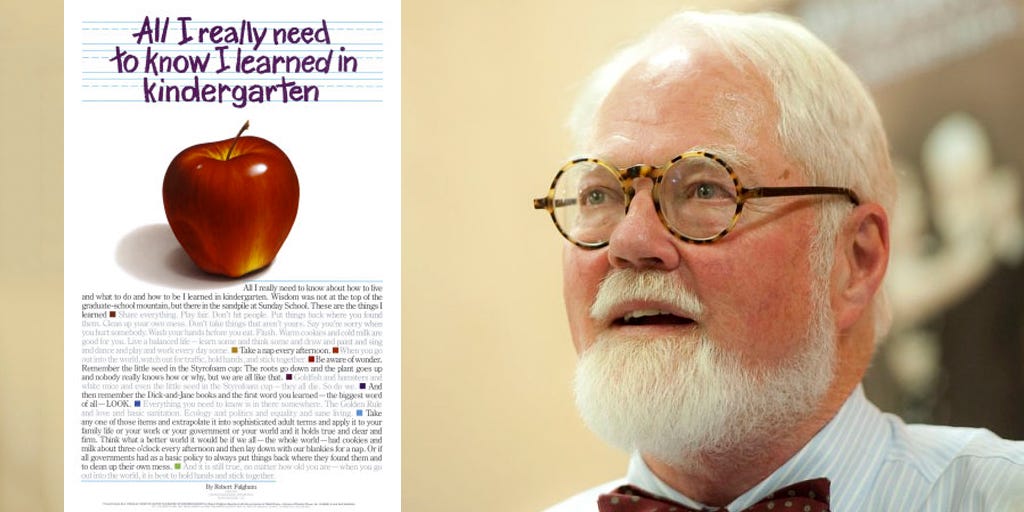
“The world does not need tourists who ride by in a bus clucking their tongues. The world as it is needs those who will love it enough to change it, with what they have, where they are.”
Robert Fulghum
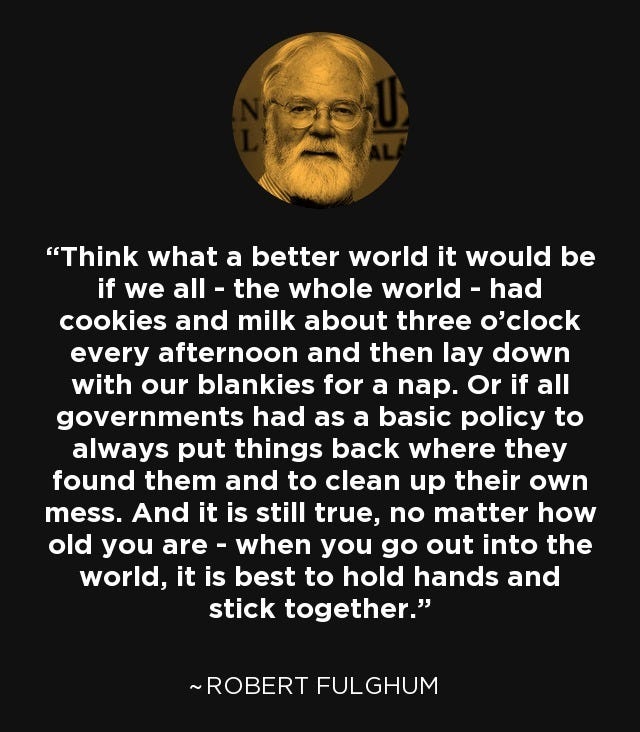
For most people the unhealed wounds they carry were received in the first five years of life. The "kindergartner" never grows beyond those wounds unless they heal.
So many people operate on what they learnt and experienced in those early years.
🌈🌹