


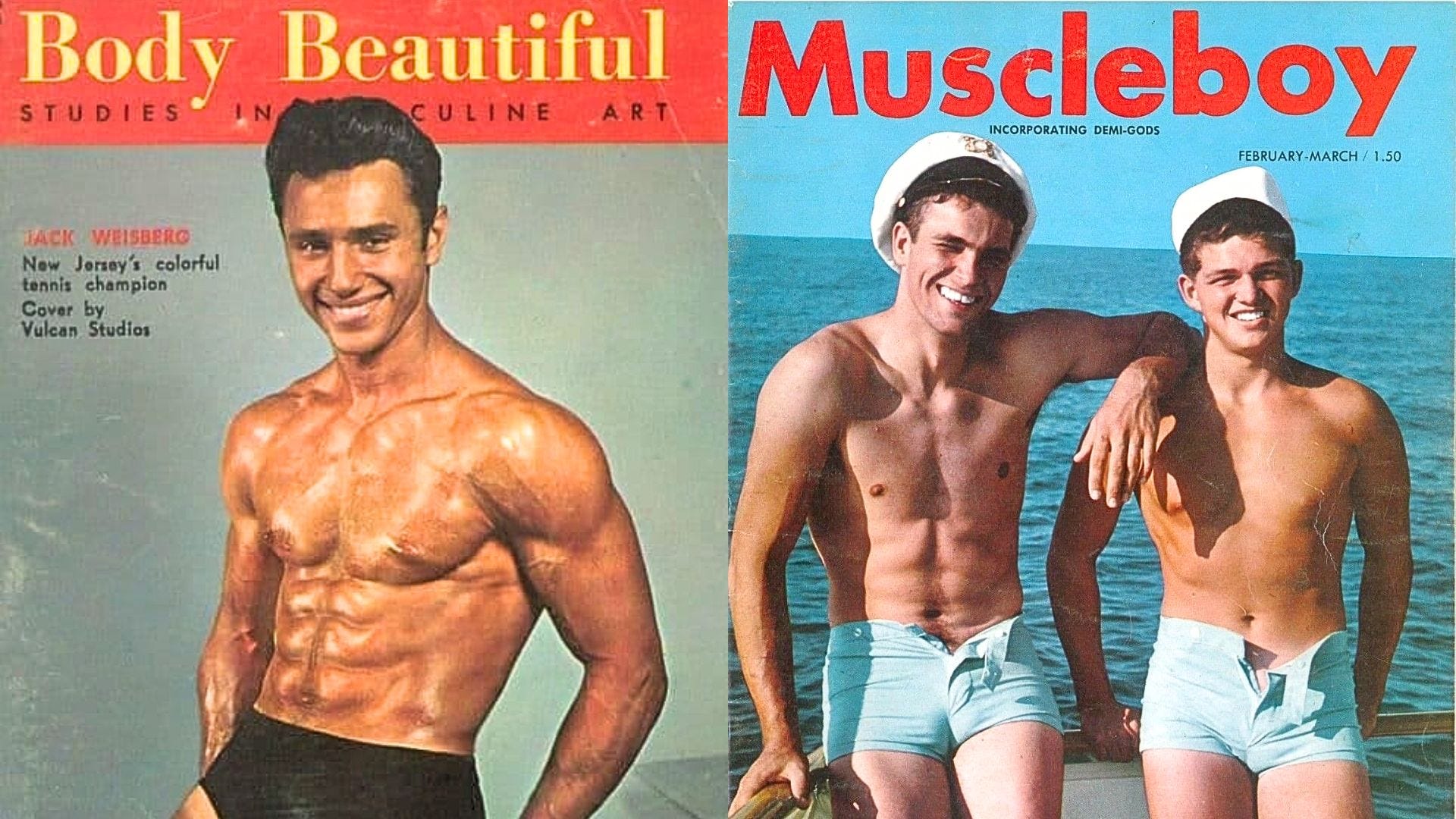
Long before OnlyFans—where seemingly everyone and their mother poses in their birthday suits—there was an underground cottage industry of artists, designers, models, photographers, and publishers creating photography for guys interested in seeing other guys...in various states of undress.
From the 1940s through the 1970s, artistic physique pictorials weren’t just risqué—they were revolutionary. And could get you arrested. These photos and publications offered a lifeline to a generation of queer men, though their creators often paid a steep price for coloring outside the lines and challenging the status quo.
Let’s take a brief dive into the fascinating world of beefcake, biceps, and bravery.
ARTFUL COVERS = HIDDEN DESIRES
The first thing that strikes me about vintage physique magazines is their often artful presentation. Most early beefcake magazine covers were beautifully composed and featured statuesque men posed like Greek gods.


Whether they were flexing on a sunny beach or brooding in dramatic studio lighting, these men quickly became icons of masculinity and sensuality.
Photographers like Bob Mizer and Bruce of Los Angeles used shadow and light (and baby oil) to transform their subjects into works of art—while the magazine the photos appeared in had to work hard to skirt obscenity laws and postal inspectors.
Over the decades, thousands of models were captured in poses that emphasized their strength and symmetry. There was little doubt who the true audience for these images were, but what was once considered obscene are now in the collections of some of the biggest museums in the world.
Why? Well, some photos were clearly classical in their composition, inspired by Renaissance masters. Others leaned into the camp and kitsch of the era, with costumes, props, and winks to the camera.
RISKING IT ALL
Creating and distributing these magazines and photos wasn’t just a business or creative endeavor. It often involved law enforcement and/or organized crime.
In an era—and in areas—when homosexuality was criminalized, publishing these types of photos could—and often did—lead to arrest and imprisonment.
Some photographers and publishers faced obscenity charges, while others endured public humiliation and financial ruin. Tragically, some even succumbed to suicide under the pressure of societal rejection and legal persecution. RIP, Fred Kovert.
Despite all the risks, models and photographers continues to crisscross the country for photoshoots, keeping this colorful business alive and kicking. And publishers like H. Lynn Womack waged—and won—legal battles that slowly but surely opened more doors for new magazines and publishers to push boundaries.
Many models—back home from military service—were straight men who saw posing as an easy way to help make ends meet. Most probably didn’t realize they were such objects of affection, fascination, and fantasy for countless young men who had never seen anything like them or their photos before.
ACQUIRED TASTES = LASTING LEGACIES
For many men who "colored outside the lines," these pictorials were especially educational and informative. They introduced a classic, mid-century modern aesthetic that was rugged, muscular, and unapologetically masculine.
While pop and queer culture today celebrates a much broader spectrum of beauty and identity, these vintage pictorials and publications undeniably shaped the way generations of men defined and desired masculinity.
Beyond their cultural impact, these magazines employed thousands of people over the years. From editors and distributors to illustrators and models to photographers and publishers, the beefcake/physique industry was a surprisingly robust economy.
And while much of this work has been lost to time, the vintage ephemera that remains offers a tantalizing glimpse into the underground world.
WHY VINTAGE EPHEMERA MATTERS
Today, finding communities and content that reflect your identity and desires is easier than ever. But it wasn’t always.
Physique magazines were a beacon of hope for countless men who felt isolated and unseen. The models were more than just pin-ups; they were lifelines and role models.
And the ephemera—ads, films, magazines, photos, and more—they left behind remind us that even in the darkest of times, people will always find ways to celebrate, create, and connect. So, whatever your feeling about the people or photos, they are important parts of our collective history. Not just LGBTQ history, but human history.
Behind every glossy cover and cheeky grin, there’s a story of creativity and resilience.
SHOP VINTAGE EPHEMERA


VINTAGE EPHEMERA GALLERIES


RELATED POSTS
Found Ephemera #1 (NSFW)
George Platt Lynes (NSFW)
H. Lynn Womack, Ph.D. (NSFW)
Horst P. Horst (NSFW)
Lon Of New York (NSFW)
Wilhelm von Gloeden (NSFW)
Some of my interest predates this era to include early photography and silent movie making from Europe and the UK. This was explicit gay porn and definitely NSFW. So, I'm harking back to Victorian and Edwardian times from the 1870s onwards.
I could use some of those 'full-nude art poses'. It's been suggested to me that I might benefit from resuming the live model chicken scratching I did before Covid. Well, I found my old sketchbooks. All I need now is to figure out how to get SS and/or stored pics onto my 'smart' (so I'm told, I wouldn't actually know, myself) TV. Full disclosure: If stick figure drawing in Kindergarten had been graded, I'd've flunked. So mhicken scratching is pretty accurate,lol.