


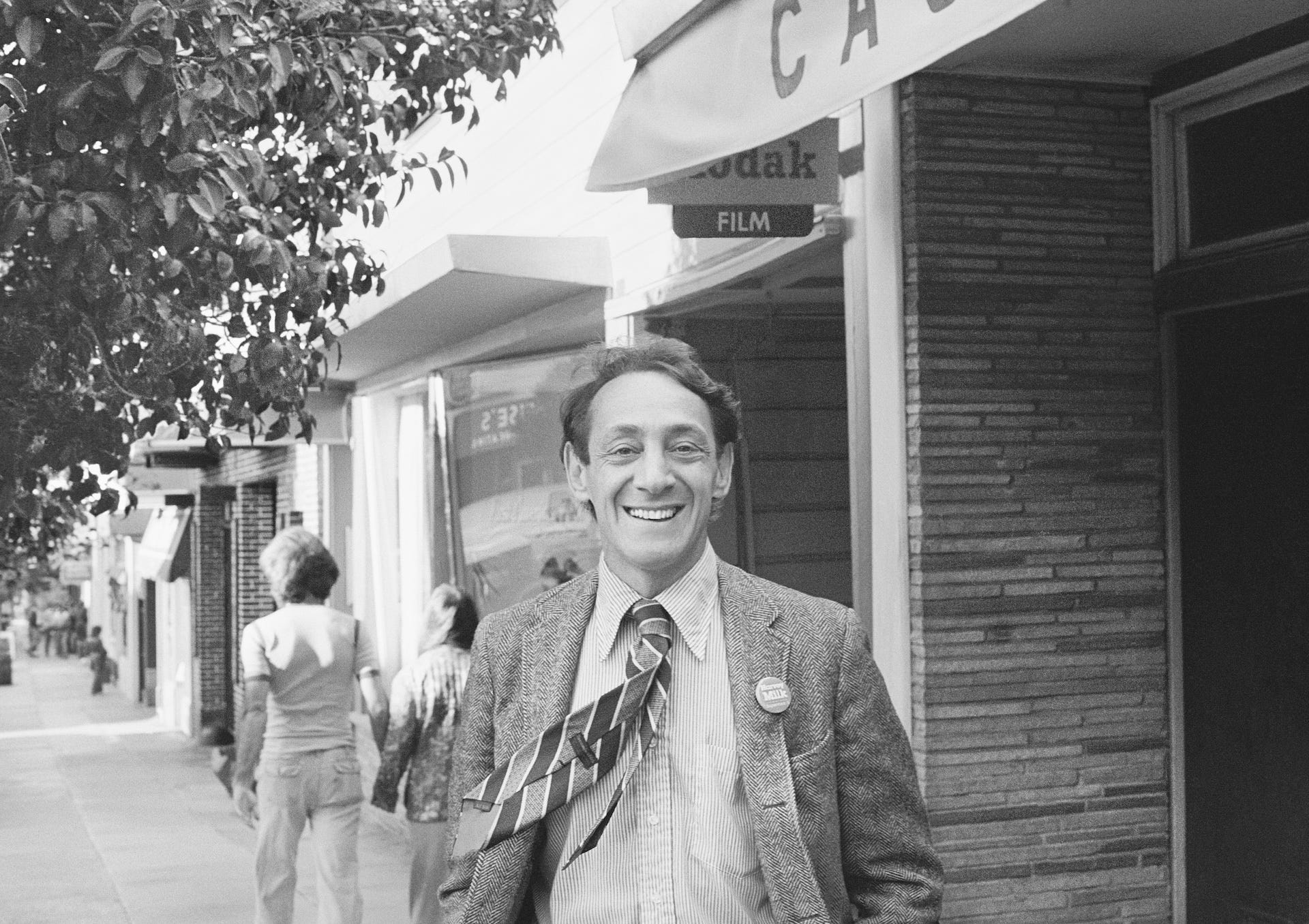
There are moments when I realize history is not actually “history” to everyone else.
It is revelation.
I had one of those moments back in 2008 after seeing Milk, based on the life and times of Harvey Milk, with a young gay coworker.
After the film, we went to lunch and cussed and discussed what we had just watched. My colleague was completely captivated by the story unfolding onscreen. The marches. The organizing. The hope. The assassination. The heartbreak.
He looked at me and asked, almost in disbelief, “All that really happened?”
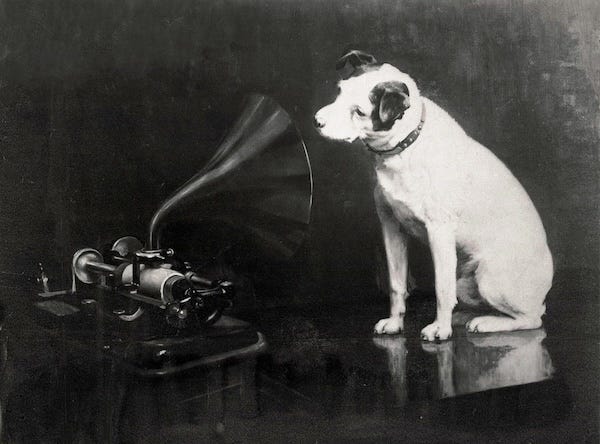
His question stopped me in my tracks and left me staring at him like Nipper, the RCA Victor dog listening to the gramophone.
Why was I so shocked? Because I had spent years reading about Harvey Milk. To me, he was not just a heroic and tragic figure from a movie. He was one of the first openly gay elected officials in America. An activist. A coalition builder. A businessman. A man who understood the political power of visibility long before most of the country was even willing to acknowledge queer people existed.
What fascinated me most about Milk was how he never separated the personal from the political. His Castro Camera was not just a shop. It became a gathering place, an organizing hub, and part of the foundation for a movement. He understood that simply existing openly in public life was radical at the time.
And that’s what made him so powerful.
He wasn’t trying to be the “perfect” gay man to make straight America comfortable. He was loud. Funny. Charismatic. Messy. Hopeful. Human.
He talked to working people, union members, activists, and everyday queer folks like their lives mattered. Because he genuinely believed they did.
That mattered to me when I first learned about him years ago. It still matters now, especially when I think about how many LGBTQ people grew up without seeing anyone remotely like themselves in politics, media, or public life.
When Harvey Milk urged queer people to come out, I don’t think he was naive about the danger involved. He understood something that invisibility was often even more dangerous. If nobody knew us, nobody had to care what happened to us.
That simple realization made a big impact on me when I was coming out.
Milk’s story also taught me that queer rights in America were not handed over politely after a thoughtful debate and a spot of tea. LGBTQ people fought for every inch of progress. Some lost careers. Some lost families. Some lost their lives.
I knew all of that sitting across from my coworker that afternoon. I knew about the Briggs Initiative. I knew about Dan White and the assassinations of Milk and Mayor George Moscone. I knew about the riots and outrage surrounding the so-called “Twinkie Defense.” I knew the AIDS crisis was already looming just beyond the horizon of the story we had watched onscreen.
My coworker, meanwhile, was encountering much of this history for the first time.
And part of me envied his innocence.
Not because ignorance is admirable. But because he had somehow managed to grow up gay without carrying the full emotional weight of queer history everywhere he went. He discovered Harvey Milk through a film instead of through fear, activism, cultural memory, and survival stories passed between generations.
That lunch has stayed with me for years because it clarified something important: Representation matters because memory matters.
For decades, queer people were erased from public life or reduced to stereotypes, punchlines, whispered rumors, and cautionary tales. Entire generations grew up without seeing openly queer adults portrayed as leaders, activists, or fully realized human beings.
Then along came films like Milk.
Not perfect. Not comprehensive. But visible.
And visibility changes people.
I saw that firsthand sitting across from my coworker while he realized this history was real. That Harvey Milk was real. That the movement was real. That the rights and freedoms many of us now take for granted were built by ordinary people willing to risk extraordinary things simply to live honestly.
For me, the film felt like remembrance. For him, it felt like discovery.
And somewhere between all our cussing and discussing, I realized something else: Harvey Milk’s greatest legacy may not simply be that he won office or changed laws. It may be that decades after his death, he is still helping queer people find each other across generations.
One generation remembers the fear. Another discovers the courage.
And somehow Milk’s story still connects us.
That matters now more than ever. Because history has a way of disappearing when people stop telling it. Progress starts looking inevitable. Rights start feeling permanent. The names and faces behind the movement slowly fade into abstraction.
But Harvey Milk was never an abstraction.
He was a real person who chose visibility in a time that punished it. A flawed, funny, stubborn, hopeful man who believed queer people deserved not only equal rights, but equal dignity.
And every time a younger LGBTQ person discovers his story for the first time, that belief keeps moving us forward.
Honestly, I think Harvey Milk, the man and the myth, would have loved that.
Keep calm and fight on!
Clint 🌈✌️
FYC = RELATED + RECOMMENDED
MILK (2008)
Where To Watch = JustWatch
THE TIMES OF HARVEY MILK (1984)
Where To Watch = JustWatch
COLLIDE PRESS is a reader-supported publication.
Please consider becoming a Paid Subscriber or Patron.
FROM THE ARCHIVES
BORN THIS WAY ON THIS DAY
05-22 = Barbara May Cameron (1954-2002) = Native American photographer, poet, writer, and activist 🌈
05-22 = Harvey Milk (1930-1978) = American lieutenant and politician 🌈
05-22 = Laurence Olivier (1907-1989) = English actor, director, and producer 🌈
05-22 = Mark Bingham (1970-2001) = American businessman and hero 🌈
05-22 = Morrissey (1959- ) = English singer-songwriter 🌈
MAN CRUSH OF THE DAY


“Hope will never be silent.”
Harvey Milk
Clint, So much of what you and I have been through, being HISTORY, seems like fiction to the younger generation. And I might say that for my history and your history being the many year dfference between us. Maybe that is why we never seem to learn! Fondly, Michael
I heard about Harvey when I was 25. First from Mark Freedman (author of "The Happy Homosexual - about the lack of evidence that gays/lesbians were more psychologically disturbed than straights). Mark and I became penfriends. I heard again more of Harvey at the first international conference on gay rights at about the same time. Mark died of AIDS when I was 30 and Harvey was murdered a year later.